Grains can be Pains..

box3 (2)

“MMMM – box lunch!   They say that if I add a little fiber to it, it will slow the absorption…”

Sugar is the ultimate “comfort food“, as that is what pasta, bread and the other indulgences are composed of  primarily.   I’m not comforted by the thought of all of it however, not even if it’s whole grain.    Do we really need 6 servings of grains per day???   Our early ancestors did not eat grain (apologies to Dr Oz – whom I respect quite a bit.)    Can you imagine a Homo Habilis dude baking some bread?  Or perhaps preparing a good rich  Serengeti spaghetti?  Our bodies are still configured to thrive on the same environmental product as they did.

Unfortunately we find that there is a lot of misleading dietary advise out there,  and a lot of it is coming from usually reliable sources.  They have the right idea of course, but I just have to take exception to some of the guidelines they harp on.

I’m sure you’ve seen the fairly new “my plate” recommendation from the USDA.

220px-USDA_MyPlate_green

While this certainly is an improvement over the earlier food pyramid, the percentages are quite a bit off in my opinion.   The USDA recommends @30% grains, 30% veg’s, 20% fruits, and 20% protein daily.  The efficacy of these proportions was severely challenged by the Atkins and other high protein successes of a little while ago.  High starch is not the way to go.

Of course the early primates did not eat a diet even faintly resembling this one.  Besides the grains, the protein recommendation is clearly way off.  As any good dietitian (or fitness trainer) will tell you, you should strive for @ .4 – .8 grams of protein per Lb of body weight.   The amount depends largely upon your age and daily activity level.  Body builders frequently need over a gram per pound or even more.  Would you say our early ancestors were what you’d call active?  I’ll bet they ate almost 45% protein (mainly from animal sources), and I recall some studies showed this.   It all stands to reason.

Please don’t assume that I’m trying to condemn grains in this post, even if it sounds that way. 😉   That’s not my goal.   Many healthy vegans rely heavily upon high fiber grain, and rightly so.  Food allergies aside whole grain is generally healthy, providing minerals and B vitamins, etc.  I myself also consume them occasionally –  and I also use whey and other dairy products which I doubt those troglodites had any hankering for.   It’s just that I think  you should limit the starches to 2 or 3 servings a day and beef up the quality protein and the vegetables to take up the slack.  If you do this you’ll go a long way to improving your health.

Posted in Diet, health | Tagged , , , , , , | Leave a comment

Calories – Less Equals More

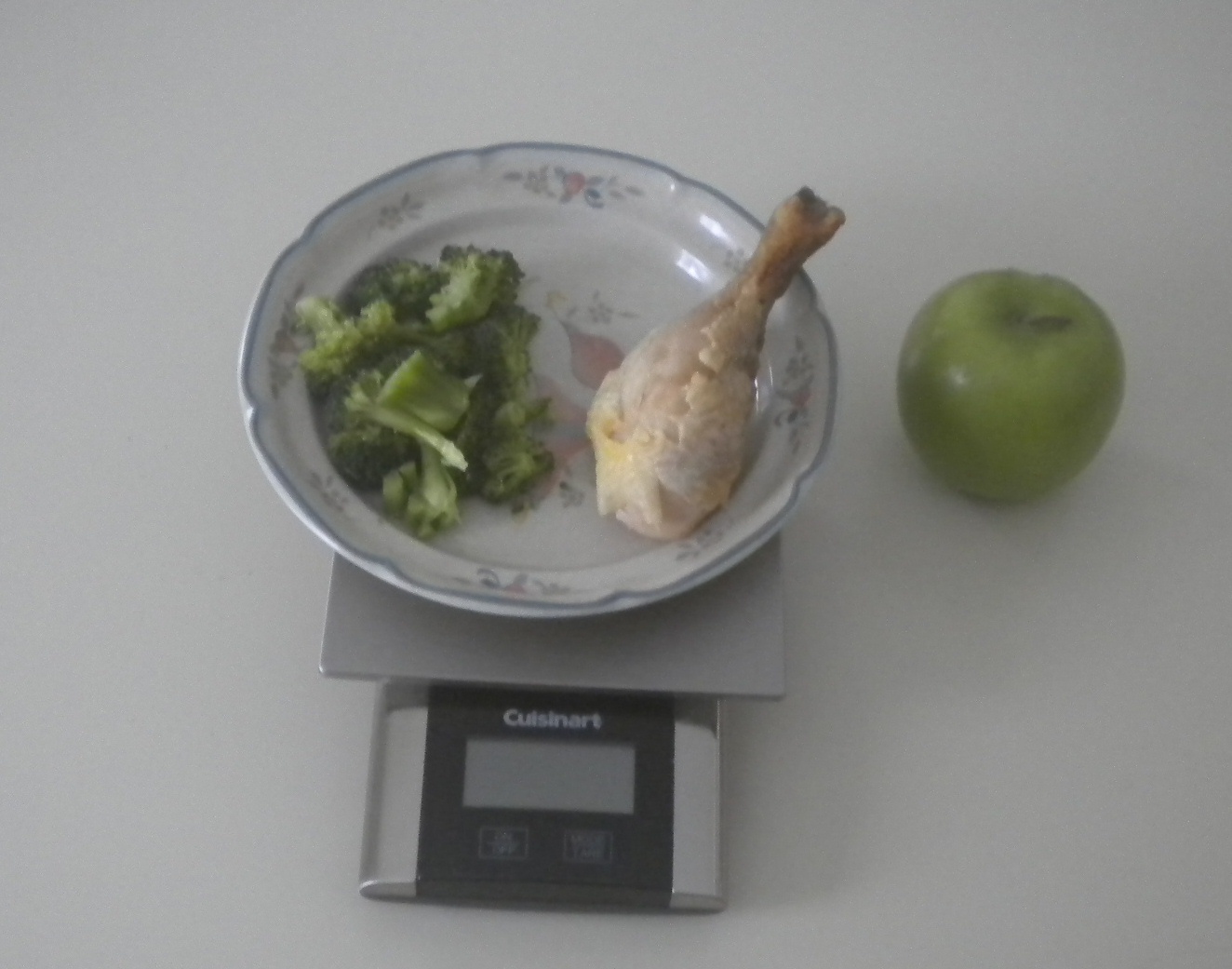
cal restrictedThis is a true “calo-restricted meal.   Austere, possibly bland, and maybe a bit unfulfilling, but the benefits of it can be astounding.   What’s exciting to know is that these benefits of profound calorie restricted meals can be made available to you – without most of the restriction part –  if you know how.

Check this out.

People in the “Life extension” arena are very familiar with the term “calorie restriction with adequate nutrition” or CRAN, which is a dietary modification that goes way beyond simple weight control and fitness; it has long been studied as a way to dramatically increase the life expectancy of the species tested.  The results have been consistent and very impressive.  What was merely an eye opening surprise in tests on fruit flies and rats in the 1920’s became true cause for excitement in the 00’s when dogs, cows and even primates showed the same dramatic beneficial overall effect.  The enthusiasm built when it was shown that even smaller reductions in caloric consumption (20-30% or so) showed similar if somewhat reduced results.

The best news was yet to come.  We now have supplements called “calorie restriction mimetics”  that can provide many if not most of these results.  These are very impressive indeed.  Calorie restricted individuals can expect to see:

  • A dramatically extended lifespan.  In animals tested a 25-50% increase was commonly observed.  Human studies are still in the early stages (because of the time involved) but many of the similar benefits are seen and great extensions are expected.
  • Increased, more economic production of ATP, the body’s energy currency.  This goes hand in hand with another observed benefit – a beneficial effect upon the mitochondria, the organelles where our energy is produced.
  • A powerfully enhanced immune system.  On nearly all animals tested the onset of diseases commonly associated with aging have been delayed or reduced.  This shows that calorie restriction does not merely extend the years, it does so by slowing the aging effect.
  • Increased and better hormone function.  Another sign of delayed aging.
  • Weight loss, delayed sarcopenia ( bone-muscle loss with aging) increased energy, all symptoms of the maintenance of a more youthful state – way into the later years.

These are all obviously highly sought after goals for many of us, calorie restriction is on of the most reliable and best documented ways to achieve them.  So how can we realize these without severly restricting our portions and our satisfaction with our meals?

First we should use the methods I and other advocates recommend for limiting the size of the servings we dole out at mealtime.  As many of my posts will illustrate this can be done gradually with very little pain or effort if you give it a bit of time.  All calorie restriction diets in general recommend a 500 or so reduction, this is not such a dramatic change, yet it represents a drop of 20% in a diet of 2500 calories.  If this can be maintained in as in a lifestyle adjustment the benefits described above will logically show up over time.  (Of course this might not apply if your starting point is 4000 calories per day!  You have to get down to a natural consumption level first.)

Second, there are those calorie restriction mimetics we spoke of.  Resveratrol and Pterostilbene,  polyphenols found in grape skins and in blueberries and other fruit – are well known cran mimetics.  Quercetin, a flavonoid in apples and onions is likewise one, and it also works synergistically with the others by increasing their bioavailability.  Another recently discovered mimetic with very strong effects is Fisetin which is found in limited amounts in strawberries and a few other sources.  Like the others it delivers powerful antioxidant effects, protecting DNA and cell membranes, etc.   Fisetin also maintains high levels of Glutathione that all important free radical quencher we discussed a few weeks ago.

These calorie restriction mimetics are available in a normal healthy diet as you can see.  However if you wish to experience effects similar to that experienced by profound calorie restricted subjects it will be necessary to use supplements that contain the isolated ingredients in elevated quantities.  This is cheap, easy and painless to do – I have been popping them for quite some time as part of my general protocol.  You can find them at any health store.

An interesting recent finding from the lab – published in the journal Cell Metabolism (studies)  showed that regular exercise may be a synergistic protocol to maintain if you wish to experience the full benefit of calorie restriction.  This came as no surprise to me, of course.  I have always maintained that the habits of good health work together, after all, it’s what mother nature intended. 🙂

Posted in Age Reduction, Diet | Tagged , , , , , , | Leave a comment

What’s in “Store” for Your Health?

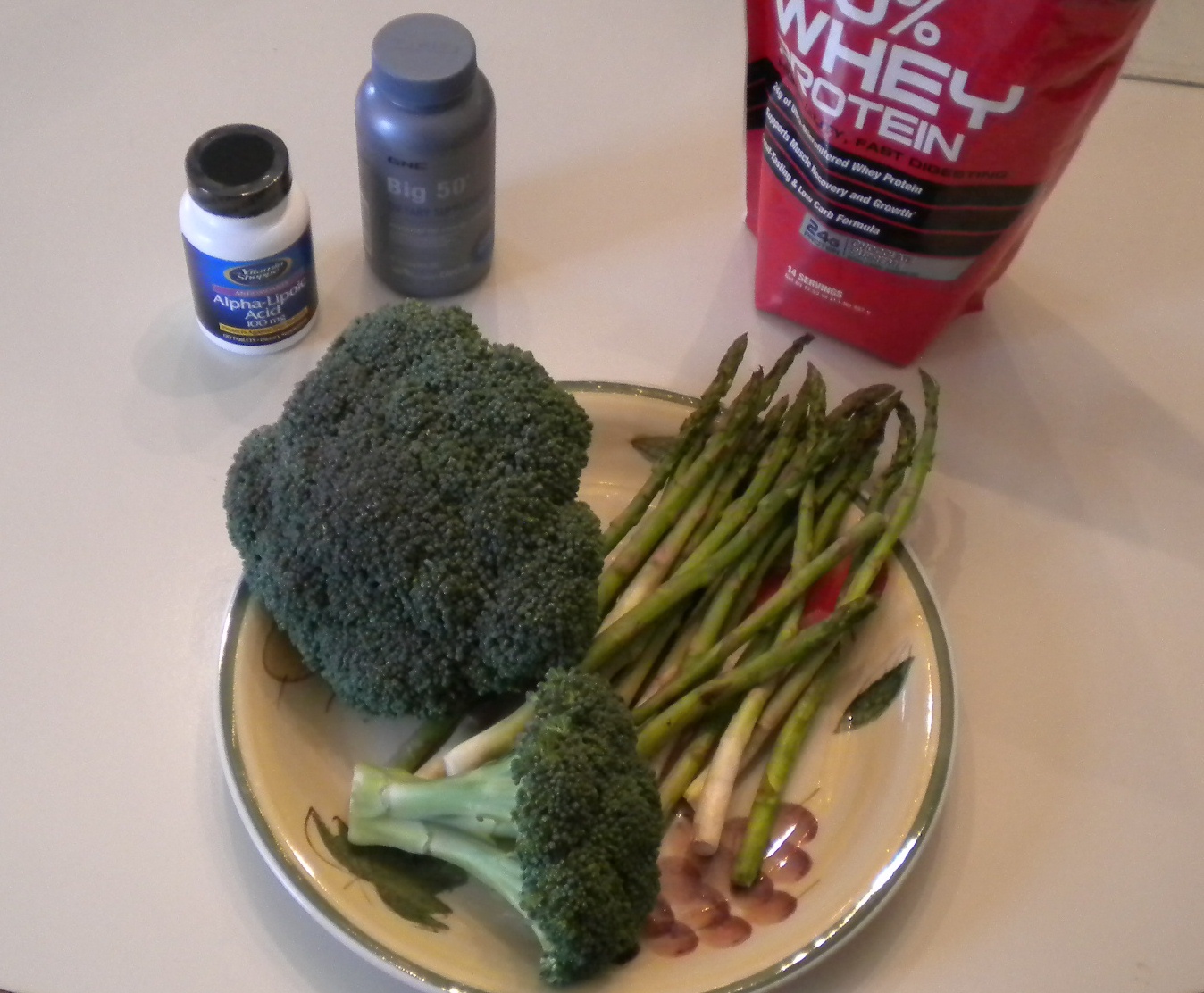
DSCN1689[1]

Any program you wish to undertake requires a bit of preparation, and a couple lousy minutes can sometimes save you a ton of aggravation…   I’m referring to your trips to the grocery store.   That’s where your true dietary battles will be won or lost.

What would you rather do – spend an hour or so in a grueling stare-down with that evil bag of chips, or simply have something ready to snatch and eat and then move on?  I think it’s a no-brainer.  If this is the case it’s obviously critical to have the good stuff on hand right?  So before you head out to fill that cart or even just a bag or two, make a list of all the things you need  including a few healthy snacks you might want to try.  Don’t neglect those snacks!

Not planning snacks is an Achilles heel for many people.  Contrary to what some believe, three meals a day is not the healthiest way to go, it’s not what nature intended for us.  Snacking is actually an important source of intake.  It is programmed into our genes –  our hunter gatherer ancestors ate whenever they had an opportunity.  They had the “deck stacked in their favor” of course because the edible stuff they found hanging on the side of the trail was usually very healthy.   But you can find good foods at the market  too, and that can be a deciding factor in your grand weight loss scheme, so don’t take it lightly.

Diet smartly, not hardly.  Brains over bulge, mind over platter, you know what it takes to win.  So grab a pen and scratch pad  for a second whenever you are headed to the store.  It will set you on the right track to weight loss.

Here’s one other helpful tip that you might try at the market.  As you’re prowling the aisles – pick up your pace.  Walk at a fast clip.  This will not encourage that “mindless grabbing of habitual junk snacks” we spoke about –  if you have your prepared list on hand of course.  In fact walking fast actually eliminates those bouts of temptation that are inevitable when you pass the row of chips or cookies.  You must move quickly – you’re on a mission.  By the way, by staying in active motion you are burning calories of course, and stimulating that metabolic “fidget syndrome” you might have heard about.  Thus little trick delivers many synergistic benefits.   It all helps!

Want some more diet planning ideas to try?  Here’s a great web site I found: http://www.brinkzone.com/general-health/re-engineering-your-kitchen-for-weight-loss/

Good Luck!

Warren

Posted in Diet, habits | Tagged , , , , , , , , | Leave a comment

Think and “Shrink”. Thinness is a mind game

imb0290621 (2)Is it all in the Jeans, or is it all in the mind?  Where is the true battle ground in weight loss and fitness?

It has been frequently stated in the weight loss circles that your body has a certain “set point” that is strives to maintain, and this phenomenon is one of the causes of “yo-yo” dieting, plateaus and a simple inability to dump the pounds.  Is this really so?  I think it is – but maybe there is a way we can turn it to our advantage instead?

Just as in its physiological twin, we have a set point of self image of our body’s configuration lurking in our minds.  It might not be the one we want, but it’s there nonetheless.   But who said that it is immutable?  Many health advocates recommend hanging up a picture of an athlete or model to motivate yourself.  This is something you really want to try.  In addition to giving yourself a goal to aspire to it can also be used to change the inner perception of your personal physical identification.   Think about it for a minute.  Though your immediate conception of yourself may be of a fat, slow sluggish person, it you put yourself through a diet/fitness program you will alter that body, and the fat, slow image you maintain will therefore be an incorrect one right?   Well, if that is so, why not change the image first?  Begin your workout/diet plan, and live as though that picture is already you.  You might find that as you begin to feel more energetic, lighter and more mobile you will improve your self image and then possibly live the part,  changing your habits, your lifestyle, and the things you are capable of doing.   The physical set point you are battling will likely follow suit and slowly begin to erode just as the pounds melt off.

But you will have to exert a little bit of consistency over a period of time for this to happen of course.

Heres an idea for you.  Picture a huge heavy metal ball laying on the ground.  You desire to roll it across the lawn.  A full 90% of your effort will be to get the thing started, but you will find that as it gains momentum it only requires a few little taps to keep it in motion.   This is simply the laws of inertia and momentum.  Your physical lifestyle habits operate the same way.  Give yourself a chance and see it happen.

I have a bunch of “sneaky little mind tactics” you can try in some of my earlier posts here: Motivation.     Hope they help you out!

Posted in Passing Thoughts, Weight Loss | Tagged , , , , , , | Leave a comment

Life is a Destination, not a Journey……

distantsun

I always enjoy going against the grain, after all, isn’t that the way to stand out?  This post will certainly do just that.  It’s been accepted as good advice (even back to the ancient Chinese) to view life as a journey and not a destination, the underlying wisdom being that if you work and slave for some far off goal you will miss actually living along the way, possibly feeling empty, unfulfilled and directionless when you finally do arrive, blah, blah, blah.  I personally think that this viewpoint is waaaay off the mark.

First, a few points to consider:

1)  Imagine setting out on a boat or plane without a destination.  Not too easy is it?  If you have some vague location you want to “journey to” you might set sail, and then –  do what?  Well, if its a journey you’d probably just drift, right?

2)  How can you hit a target you don’t even have?  “Setting out on a journey” means you will basically just depart and see what happens to you, and deal with it as best you can.  On the other hand, if you are focussed on the destination, you will prepare for it: acquiring all the tools, materials and information necessary, coordinating the parameters of departures, creating a plan and then executing it.  Sounds like the recipe for success, doesn’t it?

3)  If you look at the successful people in life, they are usually those who know exactly where they are going and what they have to do to get there.  They are by and large confident, happy and well adjusted.  It is the drifters who are trouble-ridden.

Of course you should take the time to relish your accomplishments along the way.  But  these are actually “little destinations” themselves, aren’t they?  So you are in fact “smelling the roses” as you go along, but the ones you enjoy are BIG, bulbous, fragrant ones, not the tiny, wilting stubs that the drifters are relegated to.

To summarize, viewing life as a destination basically just means that you are directing your life, as opposed to being directed by it.  You have a big goal you desire, you should never lose sight of it.  You should definately note your progress toward it along the way, and you will see the satisfaction grow as you near your destination.  When you do get there, throw a big celebration, then go and select another one!

Cheers, Big War

warrendostie3

Posted in Passing Thoughts | Tagged , , , , , , , , | Leave a comment

Gimme Some Skin…….

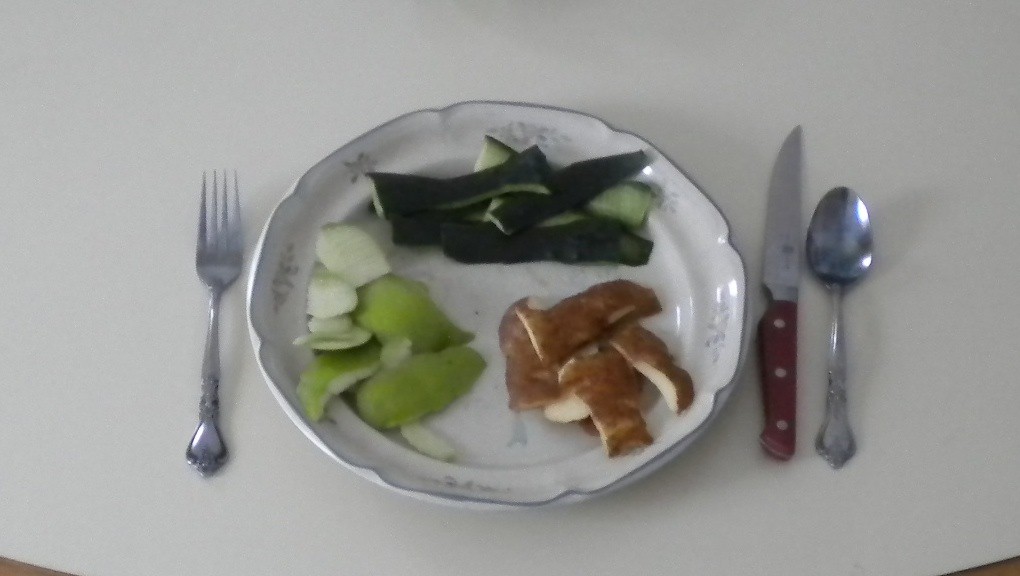
 lunchtime                             

Now that’s the way I like it!

If your head is in the right place health wise and you’ve decided to add more fruits and vegetables to your diet, please make sure you are getting some nutritional bang for your buck and don’t discard the peelings!

I was amazed to see a girl at work with a bag of peeled cucumber chunks the other day.   I suppose this is better than a bag of chips for her, but only marginally so.  Yes, she has committed to cutting calories with that snack choice, but by wasting the skin she has robbed herself of fully 90% of the benefit of that snack.  The deep rich green colored skin is where all of the vitamins, minerals and phytonutrients are housed, it’s too bad she couldn’t simply leave them on.  And if you get right down to it, it’s even  quicker to prepare the snack that way !

Eating healthy is mostly a matter of habit.  We all know that.  But habits can be created, they are not always negative.  One good tactic is to deliberately condition a liking of foods that are nutritious;  the idea that all that tastes good is bad for you is just a foolish myth.  Does it make sense to say that mother nature installed a liking for unhealthy things?  Why wouldn’t she simply give us a taste for dirt?

One food you really want to condition a habit for is your basic apple.  I formed the habit of an apple a day, just like Ben Franklin said, and he definitely got it right.  Apples are loaded with phytonutrients and they really don’t taste too bad either.  They are a simple way to lower your cholesterol naturally (more on that here) and the skin of the apple contains detoxifyers like D-glucarate, quercetin and a host of polyphenols which can bolster your health and ward off many diseases.  Another poly the apple skin contains is  phloridzin which can suppress the process of glycation, a major hallmark of aging which I discussed earlier in this post:   How Cluttered is Your Body’s Hard Drive?

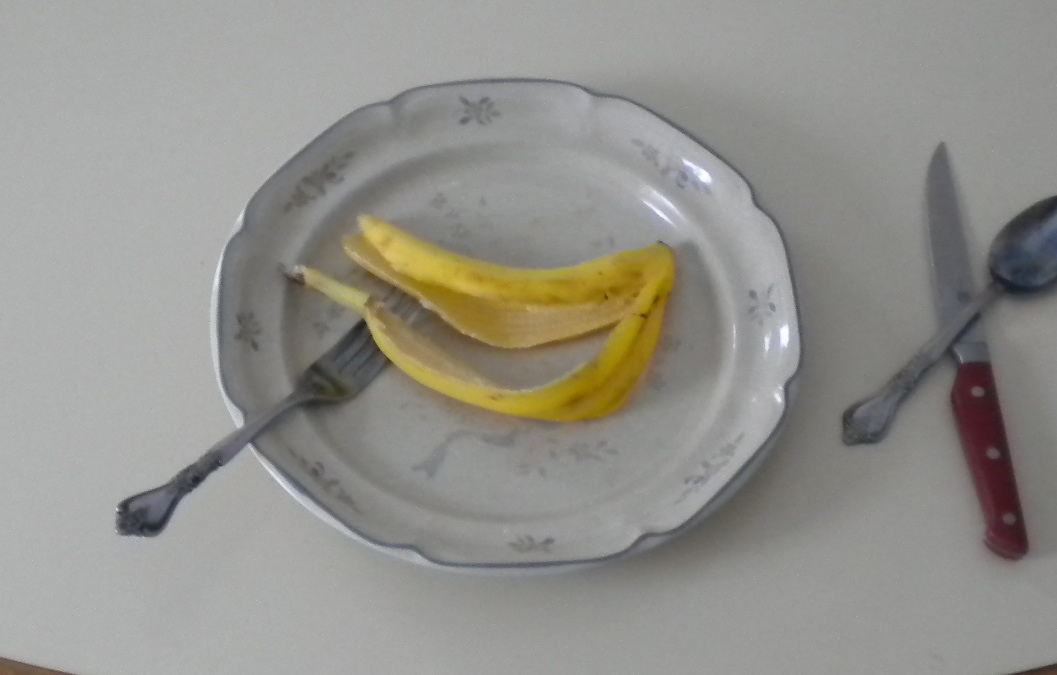
So try to make this one little change in your diet and you will realize surprizing gains over time.  Have an apple for a daily afternoon snack, and when preparing vegetables, save the peels!bananapeel

(Well, I guess we’ll pass on this one!)

Posted in Diet, habits | Tagged , , , , , , , , | Leave a comment

Glutathione – The Critical Antioxidant

glut2

We all know the importance of disabling free radicals to insure the health and integrity of our cells; among our many antioxidants for this purpose one in particular stands out – Glutathione  (GSH).  This is one chemical that you simply cannot live without.  Among other vital functions, it is your liver’s main detoxifying tool, and it is your first line of defense against the harm free radicals will do to the interior of your cells if left unchecked. 

Free radicals  (molecules with unpaired electrons in their outer shells) are generated as a biproduct of normal metabolic functions.  Cellular respiration  itself is a large contributor, and we even deliberately use free radicals as a weapon against invading cells by our immune systems.  This shows their great potential for destruction.  The unfortunate thing is that this byproduct of energy generation  can leak from it’s place in the mitochondria and begin to degrade membranes and other cell components that it comes in contact with.  The nutrients Coq10 and lipoic acid can lessen this effect, as can vit E, but the main neutralizer in the cell interior is Glutathione.   Unfortunately like everything else our internal production of Glutathione slows down as we grow older, so it becomes critical to consume the substances that lead to its increase.  With a little information this is quite easy to do.

Another vital use for Glutathione’s anti oxidant ability is the detoxification that occurs in the liver.  This complex process occurs in two basic phases.  In the first phase, your liver cells secrete  what are called cytochrome P-450 enzymes.  They deal with  the toxins and waste products primarily by oxidizing them, in a process called biotransformation.  They are more easily elliminated by the kidneys when in this state.  But again we remember that free radicals are toxic themselves, so this is where Glutathione comes in.  In phase 2 – called conjugation, your liver uses its abundant Glutathione to reduce and neutralize the free radicals that escape.   Toxic heavy metals are also removed in this process, though this is done independent of oxidation steps.

Nearly every disease we encounter as humans has also been characterized by a low level of Glutathione.  There’s obviously something going on here!  Here are the ways you can ensure adequate production of it in your own body.  As Glutathione is a tripeptide made up of Cysteine, Glycine and Glutamic acid, these will increase the material necessary for it, and also start the production of it in your body.

  1. Have a whey protein shake.  Little Miss Muffet had it right, whey is a general “health tonic”, and it has been shown in repeated testing to raise the body’s level of Glutathione.
  2. Take Lipoic acid, Vit E, Selenium, Vit B2 and other cofactors for Glutathione production.  The Lipoic acid is particularly important because of it’s ability to “recharge” or neutralize Glutathione after it does it’s job (it aids glutathione reductase).  Lipoic acid is a marvelous and fairly inexpensive supplement, among other things it is both water and fat soluble.
  3. Consume foods that naturally provide Glutathione:  Avocados, asparagus, grapefruit and strawberries.
  4. Eat foods that stimulate your body to produce more of it:  Chief among these is broccoli, but you should also consume spinach, parsley and the other cruciferous vegetables like cauliflower.
  5. Take the precursers of Glutathione:  Cysteine (amino acid), N-acetyl-cysteine (NAC), and Methionine.  Cysteine and Methionine are two of the three amino acids that provide sulfur; the Methionine is used primarily to convert to cysteine, which is the main limiting factor in how much glutathione you produce. 

As you can see it is fairly simple to maintain your levels of this crucial substance.  These nutrients that increase it are all smart choices for a good diet/supplement plan, and one of the ways you’ll experience their beneficial effects is through that vital substance you cannot do without.  So have that first whey shake on me!

For a bit more on glutathione you might try this site (glutathioneawareness.com)

Posted in Diet, health, immunity | Tagged , , , , , , , , | Leave a comment

The Longevity Detectives – Aging is all in the Genes

ChromosCan you guess my age?  Just check out my telomeres…

Why does a fruit fly live for only a few months, a mouse a couple years, a human 80 or so, and a turtle over 130?  What establishes these set guidelines?  Is there some kind of clock that winds down on us?  The answer is it’s primarily because of your telomeres, the tiny limit setters on cellular division.  These guys can bluntly show you exactly how long you will be with us, but the interesting thing is that their length is actually subject to our control to a certain extent.   There are ways we can extend it, and thus our ultimate lifespan.  The implications are incredible – imagine being able to take up a new sport in your 90’s or having your first child in your 80’s.  This is all being predicted by the amazing research coming out of the lab, I will briefly show you what this means in your everyday world.

First a little background.  Telomeres are the little caps or hoods on the ends of chromosomes.   They are often compared to the little plastic tips of shoelaces that keep the ends from becoming frayed.  They work somewhat similarly on chromosomes,  but because of the fact that they shorten a bit with each division of the cell (mitosis) they put a limit on how many times this process can occur.  When they have become too short the cell simply shuts down.  In other words it dies.  Of course, when enough cells have died, we naturally follow.

Here in brief is how the process actually works:  The cell is constantly checking the state of DNA to ensure that no damage has occured or no mutations have formed that could be mistakenly passed on.  Certain regulatory proteins – RB, P51, P21, etc.  release a protein that puts the brakes on mitosis to avoid this.  These regulatory proteins are usually tied up and held in check with “Damaged DNA Binding Proteins” or DDBP’s;   however,  when the telomere gets too short the cell senses the DNA as damaged, and the DDBPs begin to attach to it instead.   This in turn frees up the P51 et al and allows them to secrete the protein that puts a halt to the process.  The cell stops dividing and eventually dies.

Whats important to note from all this from an “anti-ager” perspective is that all of the other so called factors of aging – free radicals, glycation, impaired methylation and mitochondrial function etc., are pretty much kept in check when we are younger and healthier, and with  longer telomeres.  We can usually mount an easy defense against them at this time.   The reverse is true likewise, any protocol we can initiate that delays this shortening also extends the life of the cell.  Here’s another interesting fact – The life forms that have perpetually long telomeres – bacteria, cancer, certain worms, etc., are  all considered technically immortal.  They will live forever unless killed.   This is all interesting stuff.  The question is this: can we alter our chromosomes so that our telomeres don’t shorten?

A certain enzyme was discovered back in 1984 by molecular biologists Elizabeth Blackburn and Carol Greider with the University of California.   They received a Nobel Prize for their efforts.   They discovered that this enzyme, which they naturally christened “telomerase” could actually rebuild the ends of telomeres.    If repeated as necessary it could technically induce a state of immortality, just like that in other organisms.  Of course this created an ensuing fear that by causing this expression of telomerase and maintaining perpetually long telomeres we would foster the development of cancer in th0se cells.  (cancer does just this by the way – express telomerase).  The good news is that we have shown in the intervening years that this is not the case.   The main distinguishing factor of cancer is not it’s immortality but its diseased nature.   So the door has been opened for a promising group of drugs that could lengthen your telomeres and theoretically create your own state of immortality.     – Doesn’t all science fact start out sounding like SciFi?

As I write there are currently biotech companies seeking chemical compounds to stimulate telomerase.  One of these, T. A. Sciences, Inc. of New York, New York,  has begun marketing its product TA-65 which has shown promise in the lab for lengthening the shortest telomeres.  (The research is limited however).  If you can afford the hefty price tag – to the tune of $4,000-$8,000 per year, you can pick some up one and begin your own program of telomere lengthening.  I’m sure that as new products develop we will soon have other  routine, inexpensive alternatives we can turn to.  Keep in touch.

In the mean time there are quite a few things you can do to slow or reverse the shortening of your telomeres and potentially increase your own lifespan.  Basic simple lifestyle choices and habits work on a fundamental level for maintaining your health, and one of the mechanisms they use is your telomeres.  So follow the simple guidelines:

Eat a healthy diet, exercise, get enough sleep and use “telomere enhancing” supplements like fish oil, Lipoic acid, Coq10, Acetyl-L-Carnitine, and a good multivitamin.  These will lower systemic inflammation, reduce “AGEs” (glycated end-products), free radical and mitochondrial damage.  Also watch those processed carbs as they raise insulin which is a growth factor that shortens telomeres.  Does this all sound familiar?  Its all part of the simple plan I and other health advocates trumpet about daily.  No denying that it works! 

For more specific information on a “telomere friendly lifestyle” you should read this book on it.  (The Immortality Edge)   It is the best I’ve found to date.

Thanks,  Warren

Posted in Age Reduction, habits | Tagged , , , , , , , | Leave a comment

Start a Good Meal Right

fruitdishTraditions are often rooted in good dietary advice, but their full benefits may not be immediately apparent.  Take that little fruit salad presented before the big gourmet feast.  Why start with all that sugar you might ask?  Well, one reason is because it might help you to lose weight.

Yes, it’s true.  While there is no denying that limiting your sugar intake is a sound strategy for a whole range of health benefits in addition to weight loss, it is the net consumption that counts.  By having a small amount before that big meal you will actually tend to eat less.

Carbohydrates stimulate seratonin, a calming neurotransmitter.  Researchers know that it (seratonin) stimulates feelings of satiety, and the desire for less carbohydrates with the subsequent meal.  This is enhanced by the vitamin c that’s also in that little dish.   (You don’t have to eat a huge bowl for the effects, by the way  🙂

Of course the fruit salad is usually loaded with vitamin and mineral rich ingredients, and don’t forget all of the flavonoids, resveratrol, quercetin, apigenine, et al.  It also contains digestive enzymes, which are diminished in older individuals.  That’s probably the original rationale for the serving back in the day.  We hear daily about the benefits of these foods, heres your chance to cash in and do your body a favor.

So don’t forget to eat these little snacks.  They go a long way for good health and for preventing  your eating like a _______ -well, you know.

Warren

Posted in Diet, Weight Loss | Tagged , , , , , , | Leave a comment

Truth in Daily Living

All-seeing one

      “Early to bed and early to rise, and don’t you forget to exercise 

        Eat lots of fruit vegetables too, and some low fat meat is good for you.

        Limit the starches, you know what they say, They’ll  “fill out”  your waistline” 

        given a day.  It’s all about balance, ole Ben got it right, soon that body you’ll be

        sportin’ will be “out of sight!”

     Actually, I think Ben Franklin didn’t have to elaborate so much on healthy habits, as America’s founding fathers were pretty much forced by nature to live a healthy lifestyle.  They were very close to that “paleo” diet we’re hearing about.  Very little processed food – I don’t think they had much of a problem with potato chips or soda!  And working out in the fields all day certainly met their exercise needs.  Perhaps they didn’t live as long as us because of diseases we can routinely cure today, but they certainly must have experienced pretty robust good health while they were around.  Definitely something to emulate, in my opinion.

C ya

Warren                                          

Posted in habits, Passing Thoughts | Tagged , , , , , | Leave a comment