“Death be Not Proud” – From the Antiaging Perspective.

Strive
Waxing in a philosophical mood, I thought I should “work up a shine” on the motivation behind this blog and the anti-aging drive in general. I’ve got a few interesting points for you to consider:

Why does a fruit fly live for only a few months, a dog a decade or so, a human 80-90 years and a tree for hundreds? I think I know the answer. It makes all the logical sense, and is being bourne out in scientific laboratories daily. It is because mother nature cares only about the propogation of the gene line. It is all about survival of the species in a dynamic changing environment. Now “changing” is the keyword here, and it explains death quite nicely. Consider:
In the vast gene pool of a species, mutations that have an advantage of some sort have a better chance of surviving the hostile world, but these individual traits cannot be passed on, they will merely be diluted in a world if other individuals don’t die out to make room. Their advantage cannot be “expressed”.

Second, in order for the gene to propogate the parent of the progeny must give the infant a fighting chance in the world, so mother nature has designated a particular necessary lifespan to the species to enable this “training period”. Most of this is textbook stuff, with a bit of conjecture thrown in,

BUT – some species have evolved particular traits that throw peoples general perceptions right out of whack. This demands an accounting, and some serious review of what many of us believe. I also think it is the underlying motive for the so called antiaging movement. To explain let me ask another question:
Do you harbor the belief that “all things must pass” or “Life and death have a natural cycle”, or “The only certain things are death and taxes?” How would you feel about this statement: Death is not a certain thing. Some living things never die. (unless they are killed). Some species are or are in effect immortal. All things do not die. Now this is not an opinion, but a fact.

In light of the fact that humans live for about 80 years or so, how long does something have to live to be considered relatively or pretty much immortal? Thousands of years? Some species of tree live for exactly that. There are bristlecone pines alive today that were saplings when the pyramids were built. Not enough time? There is a specie of fungus – one living in the Midwest that scientists say is about 25,000 years old! But if that still cannot be considered “immortal” (though I think it begs the point) understand that there are many species that actually are immortal. Bacteria will technically live forever – if not killed. They go on dividing and dividing never to stop… And there is actually a type of jellyfish that when it gets old it doesn’t die, instead it reverts back to an infant stage and starts the cycle over again! Kind of interesting, aint it?

What is the underlying point behind my long painful harangue? It is that there is simply a physical cellular, chemical or environmental factor influencing life spans, and I feel as do many that with a firm understanding of it we will eventually be able to alter and control it, and we are getting closer every single day. The discoveries that I and other antiaging advocates speak about dance around the issue and do cause adjuvant influence on the factor, and also give us a chance to possibly be around when the next revolution takes place. The antiaging movement is merely an expression of the natural drive for life. The limits we select through “convention” are not “morally true” any more than it is morally right to sit back and allow a child to die from an illness because nature always planned it that way. We should not belittle the human spirit for life and survival. It breeds great things for all!

To sum up, at the very least we have a clear ability to better our lives with these protocols we have even today. My motive behind this blog is to try to bring em to you in a way you can digest and apply for yourselves. I hope you get value from what I present.
Warren
Posted in motivation, Passing Thoughts | Tagged , , , , | Leave a comment

Antiaging Supplements A-Z

supersupplements

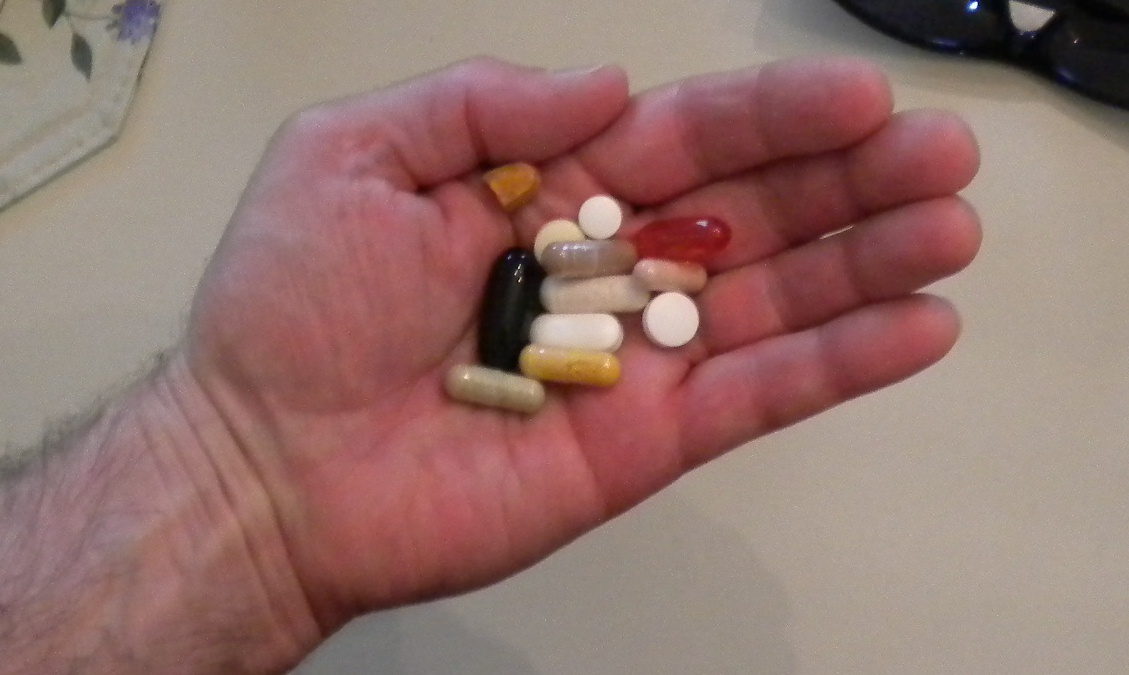
As you all know, a well thought out supplement plan is an essential element in anyone’s health/antiaging program. I am no exception. Here is my own pill-poppin’personal power protocol. I’ve designed it after very extensive research and also some serious budgetary considerations. If you would like to slow or even reverse the aging process, get a shot of extra energy, think clearer, live longer and feel better, maybe you ought to check it out. I have listed links and supporting evidence for each one. You probably are even using some yourself right now!

“A” is for Alpha lipoic acid. This is probably the most powerful anti-oxidant you can find. It is both water and fat soluble, it recharges other antioxidants after they have done their job, and it is an essential part of the energy generation process. (citrus acid cycle) Alpha lipoic acid works synergistically with CoQ10 to improve energy (mitochondrial function) and it even chelates (clears) heavy metals. A top choice and reasonably inexpensive.

“B” is for B Vitamin complex. A good one contains all the B vitamins, which are essential for carbohydrate metabolism and energy generation. B3 (niacin) can control cholesterol, B12 (cobalamins) protect the brain, most of them are essential for hormone production. Quite a package and very cheap to boot.

“C” is for CoQ10. CoQ is essential for the energy process as I noted in a post recently. It is an antioxidant that works right where most free radicals are produced – the mitochondria – so it is invaluable, and essential to health. CoQ production diminishes with age, but is is easily absorbable and not too costly. If taking statins you really must supplement it.

“D” is for – that’s right Vitamin D. This vitamin actually works more like a hormone, it influences so many biological functions. Most people are not getting enough vitamin D. It’s required for much more than calcium absorption; insufficient vitamin D can lead to cardiovascular problems, weakened immunity and system-wide inflammation. Vitamin D is deficient in most diets, if you are not getting a lot of sunshine you should supplement with 1000-2000 iu of it daily, particularly in the winter months.

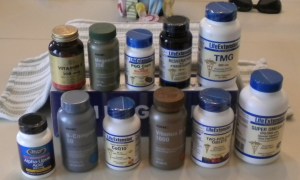
“E” is for my “two-per-day” multivitamin shown which contains vit E along with C and a spectrum of other important ones. Everyone’s supplement plan should begin with a multi, they ensure against the inevitable dietary shortages we all experience.

“F” is for Fish oil. The Super Omega-3 shown above provides ample EPA and DHA, essential polyunsaturated fats for good health. Their vast benefits are touched on right here. Omega 3’s are probably your most important supplement, their broad function is very well documented. Here is one nutrient that is actually better taken supplementally than dietary because of possible contamination issues from pollution. It is a very inexpensive and safe one to use too.

“K” is for the fat soluble vitamin K. This one is often overlooked by most multi manufacturers, and though it is available in many foods such as leafy green vegetables, the dietary portion is not very well absorbed. Vitamin K is important for cardiovascular health as is well known, but bone integrity also relies upon it. More on Vit K (and D) here.

“M” is for Magnesium. This mineral is involved in over 300 metabolic functions, and despite many dietary sources there is still rampant deficiency. I have discussed magnesium here, it’s role is as broad reaching as calcium, a mineral it often works hand in hand with. I would also recommend supplementary calcium, but it’s not part of my own protocol because I get a lot in my dairy and other foods consumption. Magnesium is very cheap, be sure to include it.

“P” is for PQQ – Pyrroloquinoline quinone. I started taking this substance about a year ago when I found that it can actually stimulate the growth of new mitochondria in the cells. As mitochondrial dysfunction is one of the hallmarks of aging it fit in well with my agenda of “age reduction”. PQQ is the most powerful antioxidant for preserving the health of your little dynamos. According to a study by the Univ of California “Pqq is 30 – 5000 times more efficient in sustaining redox recycling (in energy production) than other common antioxidant compounds” (like vitamin C). (See “Studies” page) Pqq is a bit costly however, but you can use it for certain terms, as I do.

“R” is for Resveratrol. This is a polyphenol present in red wine (grape skins), peanuts and chocolate that has gotten great publicity as an “lifespan prolonger” due to it’s effect on genetic expression related to aging. It’s benefits are very similar and also synergistic to the “calorie restriction” plans advocated by life extension experts. More on this nutrient here.

“T” The big bottle top right contains Trimethylglycine TMG which is similar to a B vit in it’s effects. It is a powerful controller of homocysteine a potentially dangerous precursor of cardiovascular disease. TMG promotes remethylation, which is the process of converting homocysteine back into methionine. Other B vitamins (b12 etc) aid in this also. Methylation is a critical metabolic process all cells must undergo. Diminished methylation is considered one of the hallmarks of aging as significant as free radical damage, hormone disfunction and possibly even mitochondrial decline. TMG is very cheap, why not get yourself some? (Its made from beets – betaine)

That’s my own personal list. As you’ll note it is not only geared toward general well being, but it also follows developments in longevity and antiaging. As stated above I have scrutinized each one individually as to veracity of its benefits and also it’s wallet friendly nature. Hope you can integrate a few of these into your own plans.

Bottoms up!
bottomsup2

Posted in Energy, supplements | Tagged , , , , , , | 7 Comments

Fitness is Fun – Exorcise your “Exercise Demons”

img_0255“To workout or not to workout, that is the question. Whether tis nobler in the body to suffer the pains, fatigue and anguish of outrageous aging, or to get up off your butt and by moving around, end them. – To sleep, to medicate, and by shutting off the pain to dull what ails you – is that the culmination of healthy well being? At least you can dream about fitness – ay there’s the rub, for the pills and dreams won’t get you that sexy body you desire.” 🙂

Hamlet makes a few pretty good points in his famous soliloquy. When applying them to fitness, alas, for many – tis easier said than done. But as we all truly know that the battle over your health exists in your mind, I have here a few interesting ideas that might make it a bit easier for you.

I think that motivationally speaking, exercise is a study in paradoxes.
To the average person, the concept of working out brings to mind sweat, toil, aches and other sorts of discomfort. Their primary motivation is that of freedom from fear of illness or relief from the misery of obesity. But those who work out on a regular basis don’t share those negative drives. They revel in in the sheer enjoyment and empowerment that robust physical vitality provides. They relish the abundant returns their little bit of effort brings them.
For this reason every workout is a gift to yourself. That’s the way you should look at it, because it’s true. You allow your “superego” to override your id.” Your reward is exactly that which you are trying to avoid. (Heres one of my favorite posts on that)
Whats also interesting to note is the second paradox of fitness motivation:

Every workout is a deposit in your bank account of energy and vitality. This is a paradox because when we think of exercise our first impression is that we are expending energy, we “use some of it up” Of course the reality is that with every bit of labor exerted we garner greater capacity to do more later. We get more fit. We increase our available energy. And most importantly we feel it, and it feels mighty good!

Of course this is really just a long harangue on “positive thinking”. But it is true nonetheless, and if you want to succeed at improving your health and vitality you have to get yourself on your own side. Give yourself a chance. Give yourself the gift of that workout. – And another and another…..

Posted in motivation | Tagged , , , , , , | Leave a comment

Cholesterol Confusion. The Hype May be Worse Than The Number

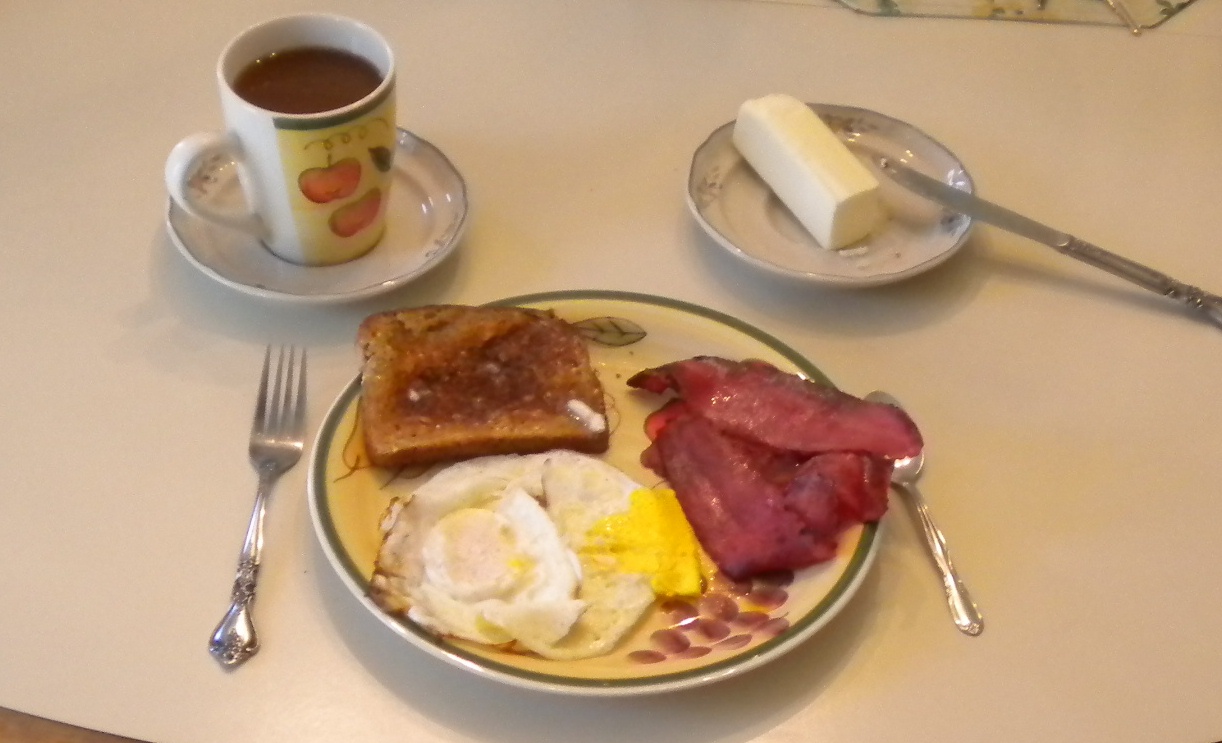
bfast1

When people are asked to name a risk factor for heart disease, what do you think is the first thing that usually comes to mind? I’ll bet “high cholesterol” would be one of the top responses. But is this great concern truly necessary? Is it possible that there may be a type of “cholesterol hysteria” gripping us? I think so. Here are some interesting facts that often go overlooked:

Point #1 Cholesterol is an essential fatty substance that you cannot do without. It is the raw material for your steroid hormones like testosterone and cortisol, it is required for the synthesis of Vit D in the skin, and it is necessary for proper maintenance of the brain. This is just for starters. Do you really want to cut yourself short on this critical substance?

Point #2 Most of the cholesterol you need is manufactured in your liver. When you provide more in the diet it simply makes less. Your body needs to maintain a certain critical level of it, so attempting to drive the numbers as low as possible can be dangerous. There are studies that show that very low cholesterol levels raises the risk for some cardiovascular diseases. (thrombotic stroke, etc.) You should probably strive for a total cholesterol level somewhere around 170 to 200.

Though foods that are high in saturated fat can in fact raise cholesterol levels, they primarily raise the good LDL cholesterol – the large fluffy type A LDL. Excessive carbohydrate on the other hand raises the small, dense type B LDL which is the one you should be concerned about. A high proportion of omega 6 oils in the diet (linoleic acid) can also elevate your Type B LDL. This is another reason to ramp up the omega 3’s instead, which also can lower your triglycerides.

I’ll bet many people would also be surprised to learn that saturated fat actually raises beneficial HDL readings too, and this is greater than the rise in LDL. Again, this shows that the demonization of saturated fat may be way overblown. These are the things your doctor may or may not be telling you. Your doctor knows best of course, but do you have the best doctor?

A few other interesting points: Most people who suffer heart attacks do not have elevated cholesterol. The large studies that are most commonly referred – the Framingham Heart Study, the Nurses Health Study, etc., actually do not implicate high cholesterol as a serious threat – if you read the details of thir research. As a matter of fact in the Framingham Heart study the group with heart disease had essentially similar cholesterol levels as the group who did not. A study is only as good as its interpretation, so read each one with a discerning eye.

I don’t want to imply that you should simply ignore what your blood lipid profiles tell you. High LDL generally does lead to accumiulation of plaque in the arteries, and a host of dangerous ramifications. But if your numbers are not outrageously high, and if the details discussed above are ok, you may be missing sleep over nothing, and your excessive statin use may be causing some negative side issues.

A far better approach would be to watch your blood pressure readings, your weight and your exercise habits. There is no question that these would do much more to ensuring your cardiovascular health.
If you want some good basic info on lipid diagnosis, you might try this interesting web site.

Warren

Posted in Uncategorized | Leave a comment

Exercise Motivation Tips

choices

Name yer poison.

Either of these options will provide pleasure for you – though in a different way of course! I happen to be a strong advocate of both of these. I think there’s nothing better than a cold beer after a hard workout. (After my whey shake of course).
But if you have difficulty motivating yourself for the first part of this equation, here are some ideas to hopefully “ramp up” the enthusiasm.
Do you ever hear yourself uttering these words: “Yes, yes, yes, I know I have to exercise, and I will  –  tomorrow. ”   That must be one of the most common phrases in the world I think, and we’re all guilty of it at one time or other.

But unfortunately for us, the tomorrows add up mighty fast, and pretty soon you reach Summer or whatever other deadline you’ve selected –  unable to bask in your success, and wasting yet another year,  that is  unless you can lick that motivation thing.   Lets take a look at how to accomplish that.

Just like in the undertaking of any other project, a workout plan requires goal setting, planning, and execution.  Each one of these factors has myriad psychological implications, and in a positive light these can open doors for successful accomplishment.  How to apply it?  Very simple.

Goal setting is obvious, you want to lose x amount of weight, or generate x amount of added energy, etc.   Though these are respectable aspirations, they are so lame!    Why do you want to lose the weight?  To look and feel young, strong, sexy and vital?  Why not get a visual aid to help your motivation?  Put up a picture somewhere of someone you want to look like.  (cut off the face if you want! 🙂  Goals work best if they stimulate emotions.  Excitement and visualization are the greatest prods to action.     Another example – if you want to quit smoking per se, find a picture of a sickly disgusting diseased lung and post it where you happen to stand when you usually light up.  That is creating an effect!

Planning your workouts just like your diet means setting up a workable schedule and writing it down.  Circle dates on the calendar.  A vague “hmm, I think I’ll just start doing it every other day or so…” is useless.  You need it in your date book, or with a beep from your phone scheduler.  You need that build-up to the scheduled day.  You have to build up it’s importance.

Execution is simple if you remember these facts:  One – The hardest part of a workout is the start.  You should make every effort to play up the rewards of the action, but downplay the effort required.  What does this mean?   If you are having trouble motivating yourself, you are doing just the opposite.    So get your mind in the right place.  Your workout is quick and simple.  You will be done in no time.  You will be very glad you did it when you’re finished.   You know that.  So just suck it up and start.

By the way, every time you exert a bit of control over yourself it gets a little easier the next time.  That’s a fact of nature.  Furthermore after a mere few weeks your program will become a habit, and they you will really take off!  By then you will be seeing concrete results too.  That image is getting closer and closer……     That’s what I call hard core reinforcement.

Being smart means getting yourself in your own corner.  I hope these little tips can make a difference for you.

Warren

Posted in Exercise, habits, motivation | Tagged , , , , , , | Leave a comment

“Fast Asleep” – Fast! How To Stop That Endless Tossing and Turning.

imagesThe list of debilitating effects of not getting enough Z’s just keeps growing and growing.  We hear now that it may be partly responsible for our inability to shed the pounds (excessive cortisol production).    It has a powerful adverse effect upon our hormones like  testosterone, it increases our risk of  cardiovascular issues, possible dementia, and all sorts of other goodies.   Oh, and of course falling asleep in meetings or on dates isn’t a very pleasant consequence either.  🙂   But if you are one of the multitude of unfortunate sufferers, don’t despair, there is hope right here– just take a glance at these quick tips and facts:

If you aren’t spending enough time in that dark zone you must eliminate the variables, take care of the potential causes one by one.  There is a reason why you are not “snoozing properly”  you have to isolate and identify it.

  • Have you gotten enough physical activity during the day?  Sleep is intended by nature to be a period of rejuvenation for a day of exertion and expenditure.  This does not mean that you have to grunt it out all day long, but if you can add anything physical to your routine you will relax much deeper and more soundly at night.  Even a simple 10 minute vigorous walk will go a long way.
  • Do you have a quiet, comfortable place to rest?  Elliminate distractions and bothersome sounds, lights, etc.  This is all common sense, but not always followed.
  • Watch the stimulates and other “sleep busters” in the evening.  Having a large meal too close to bedtime will wake you in the wee hours, drinking even a couple drinks or beers will inhibit restful sleep.  Booze does not put you to sleep.   More like it knocks you out.  It disturbs normal sleep waves, and you very likely will not achieve any deep REM slumber.  Also it may force you out of bed for that nocturnal bathroom trip.  Whats more important –  the rest or the drink?
  • Put your mind to rest before your body.  Take a couple minutes before hitting the sack to go over the issues briefly that may keep your mind racing later on.  Try to make a short formal “summarization” of them before you shut the lights, try to make this your final thoughts on the matter for the night.  I’ve instituted this routine for myself and experienced pretty good results.  Try something similar.
  • If all else fails there are all sorts of sleep aids on the market; with the exception of melatonin (a very healthful choice for myriad reasons), I don’t generally advocate them for long periods.  Why?  They can be addictive.  At the least, when you go off them you need a readjustment period – not a pleasant thought.

How bout trying that simple old time remedy Grandma always recommended?  Milk and cookies?  Believe it or not this can be effective, because milk has tryptophan, and the cookies (one or two, not a handful!) provide carbs to wash competing amino acids away, enabling tryptophan’s eventual conversion to melatonin which is the sleep hormone.   The scientific rational is there, and myself I’d jump for any healthful idea that also tastes good.  Why not give it a try?    I got it on my list.

Warren

Posted in health, sleep | Tagged , , , , , , , | 1 Comment

Olives – Tasty, Healthy, and Versatile

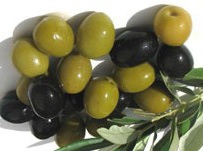
olives (2)Those enjoying a Mediterranean diet got it right – lots of fish, wine, vegetables and olives.   Makes me hungry just thinking about it.   If you take the time to prepare meals with these ingredients you will be going a long way to ensuring your health, and your culinary enjoyment in the process.  Here are some of the recent scientific findings  about olives, and a few nice suggestions for adding them to your diet.

I read an interesting article from the “You Doctors”  – Dr.’s Oz and Roizen, describing some of the youth promoting and general well being enhancing properties of this amazing fruit.  The monounsaturated fat and phytonutrients contained in olives are not only cardio-protective, immune enhancing and arthritis inhibitive, they can also help prevent wrinkles and enhance your sex life.  The doctors also point out that researchers have recently found out that a component of olives called oleocanthal may be helpful in the battle with Alzheimer’s disease.  This substance increases production of proteins and enzymes that can knock out amyloid tangles, which is a hallmark of the disease.

Other findings that help to explain the cardiovascular protective effects of olives and olive oil revolve around it’s constituents oleuropein and the oleanic acids.  Researchers have shown how these ingredients can facilitate endothelial health and benefit hypertension – lowering blood pressure as efficiently as many administered drugs.  (see “studies” page above)   I suspect that other disease fighting benefits will surface in the lab as time goes on.

One other well known benefit of the olives and olive oil is the way it can be used as a substitute for butter.  When cooking in the pan, and of course in salads and other foods olive oil is so tasty and also convenient – another critical factor in my home.   We particularly like it in conjunction with mushrooms, peppers and onions.  Here’s an earlier post on that. Opium – Your Key to Great Health

When purchasing olive oil always look for “extra-virgin, cold pressed.  This type is undenatured and will deliver more punch and benefit.  It’s worth paying a bit more for the good stuff –  it tastes better too.  And try to cook under the lowest temperature possible.  This is a healthy practice in all cases.        Bon – appetit!

Warren

Posted in Diet, health | Tagged , , , , , | Leave a comment

Co Q10 – The “Youth Pill”

By now everyone’s heard of  this substance, I will explain why it’s one you really want to add to your supplement plan.  Calling it the “youth pill”  might not even do it justice.  Consider these facts:

Your body’s energy source – the “giver of life”, the thing that separates us from a stone is a substance called ATP.    ATP – adenosine triphosphate, is a chemical with high energy bonds in it’s phosphate chain.  When one phosphate is broken off energy is released, which is the propellant of everything from muscle contraction, digestion and immune system function, to even thinking and using our eyes, ears and the other sensors.  The formation of ATP is the goal of the foods that we eat, it is the way we avail ourselves of its energies in them.  So I’d say it’s pretty important.

There are various pathways our bodies take to manufacturing ATP.  The main one – the electron transport chain or ETC  requires CoQ as a “carrier of hydrogen ions”  to drive the proton pumps that make the ATP.  This takes place in the membranes of the mitochondria of the cell, often referred to as the cellular “furnaces” or “powerhouses”.

There are other substances required by the mitochondria for this process:  like cytochrome and of course oxygen.   We can make our own Coq for this process, but like anything else it unfortunately declines significantly with aging.   And so we have one of the reasons for that noticeable drop in energy as we get older.  But therein is implied an easy solution.

Simply supplement the stuff.  When you consider some of the other benefits of this amazing, critical substance, taking it is a no-braner.

  1. Coq is a powerful antioxidant, it’s presence in the membrane of the mitochondria diffuses free radicals right were they are most produced.  It’s right on the front lines.
  2. Coq protects the brain.  Glial cells (cells that perform upkeep for neurons)  require ATP to do the job.
  3. Coq travels in the bloodstream (also the lymph system) attached to LDL cholesterol; it thus may help to prevent LDL oxidation, the real danger of bad cholesterol.
  4. It recycles tocopherols (Vit E) after vit E has donated an electron to quench free radicals.  Too much Vit E can become toxic itself, a process called “tocopherol mediated peroxidation.  So it must be neutralized.
  5. Coq10 protects the heart.  This is a critical supplement for those taking statins for high cholesterol.  Nearly every doctor prescribing them now includes CoQ10, because the enzyme that forms cholesterol also manufacturers your Coq, and the statin will inhibit both.  Your heart requires a great deal of ATP.  Diminishing heart energy is the last thing a cardiac patient wants to do.

Incidentally, did you know that aging hearts actually have a tougher time relaxing between beats than they do in pumping blood strongly?  Coq helps the heart to relax.   Nuff said?

So anybody experiencing a decline in energy, taking a statin, or wishing to maintain youthful health and vitality really cannot afford to miss this nutrient.  It’s benefits are so fundamental and encompassing.  I would recommend 50 or 100 mg of coq10 to be taken in the morning and evening.  Take it with food, particularly fat – like that fish oil supplement –  as it is a fat soluble substance.  Your health is in your hands.

Warren

Posted in Energy | Tagged , , , , , | Leave a comment

Pour a Little Health On That Dish…..

herbgroup (2)

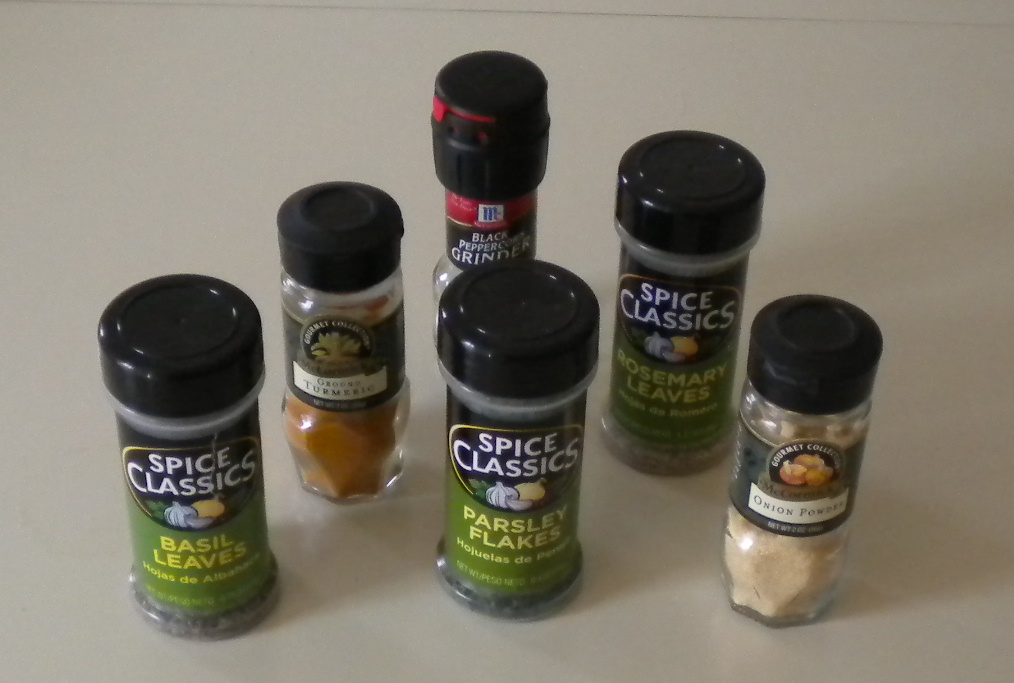
Everyone knows that the ingredients that you cook in your meal are critical of course, but you can boost the health – and the taste – by sprinkling on your own little “special concoction.”   What could be an easier way to make an impact in your diet?

In my opinion herbs and spices should  be considered little “micro food giants.”  The benefits they provide across the spectrum are enormous.  In fact,  I’d even say that these “little weeds” might be a secret way that we can convert our modern, generically dissipated foods back into the “health dynamos” that the primeval world delivered to our ancestors.  Unlike most foods the spices are for the most part unaltered and concentrated, and their effects are therefore profound.  Could this be the underlying reason why they make food taste so good?

Here are the most powerful ones, and an idea for utilizing them:

1.  Parsley.  This herb is perfect for many entrees, we use it more than salt in our household.  It is high in Luteolin, a flavonoid that can prevent your DNA from oxidative damage.   It can also help your body recharge its most important antioxidant – glutathione.  Sprinkling parsley on food automatically adds vit C, A and bunch of other essentials too.  This is one you want to keep handy.

2,  Basil.  Here’s an herb with noted anti-inflammatory effects.   Inflammation is known to be at the heart of most modern diseases.  Basil may also help to lower blood glucose, and it has shown to be beneficial to the kidneys.

3.  Celery.  Celery is loaded with fiber, it contains vitamin C, also magnesium, potassium and other essential minerals.  Similar to parsley it provides luteolin, so it aids in controlling inflammation.  Also in the mix:   Coumarins, which may prevent cancer, and phthalides which can lower blood pressure through dilation and relaxing of blood vessels.  Quite a punch for a food that has almost ZERO calories!

4.  Sage.  Sage is particularly high in antioxidants.  In general, herbs possess more free radical quenchers than do other foods, even fruits and vegetables, and sage is one of the tops.  Like curcumin listed below, sage may also possess neuroprotective properties.

5.  Ginger.  Ginger may aid the immune system, it also can relieve certain stomach ailments.  You should always make it a point to get some ginger sauce with that Chinese food takeout.  It’s pour-on protection, and tastes great!

6.  Turmeric.  This is one of the Superstar Additives.  It’s powerful compound curcumin continues to surprise researchers with new health benefits.  It’s effect on reducing systemic inflammation is very well documented, and it now shows promise in treating cancer too.  (studies page)  It has a particular taste of course, and it goes well with some foods, and not so well with others.  I mix the orange curcumin with mustard and also put it on eggs, chicken, etc.

7.  Onion.  Onion has bacterial protective properties for the stomach, it is related to garlic, another one you should use.  Onions also have quercitin, a powerful anti aging ingredient I’ve discussed in previous posts.  Onion powder adds flavor and powerful health protection.

8.  Rosemary.  Sprinkling rosemary and olive oil on chicken or steaks can somewhat mitigate the effects of overcooking at the barbeque, and the unhealthy HCA’s and Nitrosamines that can form as a result.  Nitrosamines are a product used in pesticides, by the way.

9.  Cinnamon.  Cinnamon has shown promise in reducing blood sugar spikes after meals, and it has even been shown to help to lower LDL in some studies.  This is good news for diabetics.   You can add cinnamon to coffee or cocoa, or even simply your whole wheat toast in the morning.  Make your own cinnamon rolls?  Why not.

As you can see, using herbs and spices on most of your dishes is a good approach for many reasons.  People may also tend to use less salt and sugar for flavoring if the dish you prepares can really bowl them over.   And you know don’t need all that sodium and sugar.    So why not give this a try:

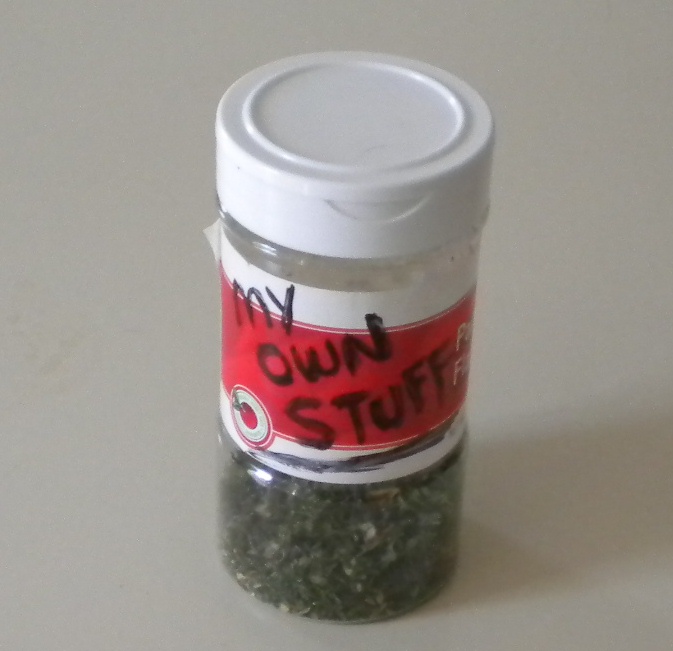
Any good book of recipes will list many of the above herbs and spices as ingredients in their menus.  You can determine which of them best suit your taste, then combine them in your own handy shaker.  In most cases this is far better health wise than simply grabbing a premixed concoction from the grocery store shelves.  Why?  Because manufacturers often combine monosodium glutamate and other unhealthy flavorizers in their mixes.  If you scan the labels and see something as innocuous as “natural flavor” it is still unhealthy.  Natural flavoring is a common masking term for known causers of neurotoxicity and free radical generation;  you truly want another approach.  Its far better to simply buy a few of the isolated and fresh herbs yourself and mix them together in your own special concoction.  Make yourself a big batch.  This way they taste exactly as you like and you get all of the benefits listed above and more.

Bon appetite!herbmix (2)

Posted in Diet | Tagged , , , , , , | Leave a comment

Bone Maintenance for Life

skeltonYour bones have got your back –  and your legs, arms and skull too.  They are 206 little structures that you don’t want to take for granted.  I’ve got a few easy tips for keeping them strong and vital, and for saving you a lot of  “aggravation”  down the line.

We all know the primary role of bones in the human  body right?  They support your whole structure, and provide protection for the internal organs.  But did you know that they are indirectly important to the performance of your heart and also your immunity to disease?  Never forget that your body is an integrated organism, most components have a critical interplay with the others and the whole system is only as strong as its weakest link.

There is a commercial making the airwaves (or cablewaves) right now about a bone promoting drug that has gained a lot of popularity.  It’s of the class of drugs known as bisphosphonates, which slow bone reapsorption and degradation from cells called osteoclasts.  These drugs work fairly well against osteoporosis, but I have a “bone to pick” with this ad nonetheless.  The subject in the commercial laments on how your body “robs the calcium from your bones”.  This is ludicrous.  If your bloodstream is low on calcium your body must draw from your bones or you will simply die.  Calcium is critical for nerves to function, in fact without it no muscle can contract, and that includes your heart.

So we come to the second important duty of your bones, the repository for needed calcium in a shortage.  This clearly illustrates the importance of getting enough in the diet.  Magnesium, phosphorus and traces of boron are also required by the way, as are the vitamins K and D.  See this earlier post on that:  Magnesium  and here:  Vit D and K

The other function of your bones is the formation of red and white blood cells which occurs in the marrow.  They are thus critical to both cellular respiration (oxygen transportation) and immune function.    All together its east to see that your bones do far more than merely “hold you up.”   Here are the easiest ways to ensure that they can do their job:

1.  Be sure to get enough of the raw materials as shown above, calcium, magnesium, etc.  These are available in animal and plant sources and also in supplements.

2.  Lesser known is the importance of getting adequate protein.  Studies have shown that ingestion of insufficient protein can weaken the bones.

3.  Be sure to consume plenty of fruits and vegetables.  They are vital for maintaining the body’s healthy ph level which is around 7.35 to 7.4.  If you consume an inbalance of protein to vegetables the body may become too acidic, and calcium will be lost as a result.

Finally, if you wish to keep your bones strong they will have to have a reason to be that way.  Their first function is for support, so they must undergo periodic stress now and then, and that means weight bearing physical exertion.  Walking is often advocated for this, but it is actually minimally effective as a bone-ensurer.  The solution?  Here is what I think is the easiest and quickest way to work out those bones:

Find yourself an object that you can easily carry with moderate exertion for a short distance.  It makes no difference what it is – a dumbbell, piece of luggage or even a bag of dirt.  If you are older (60’s or beyond) or  way out of shape you might opt for something in the 15-25 pound range per se.  If you are fairly fit and younger you might go for about 40-50 lbs.  Now perform your routine after work or after dinner walk or run.
A  15 -20 minute stroll would suffice, and of course this is the minimum that the experts recommend  for general health.  You should now be  sufficiently warmed up for the next leg of your workout which is to carry that selected object for about 2 minutes, which might take you a distance of about 200 meters – depending upon your pace.    And that’s all there is to it. It’s that simple.  No “pumping iron”, no lengthy calisthenics session;  if you detest any form of workout this little weight carring session will provide significant benefit for you, particularly if you cannot bring yourself to perform any particular regimen.  Carrying a fairly heavy object involves many supportive muscles.  It should leave you a bit breathless, but that is a good thing.   The beauty is that it’s over and done with in minutes,  – quickly and painlessly.  What else can you ask for?

Thi is just another idea for simplifying fitness in a hectic world by yours truly.   Give it a try and see for yourself!

Some content on this page was disabled on November 13, 2023 as a result of a DMCA takedown notice from Nucleus Medical Media, Inc. (Nucleus). You can learn more about the DMCA here:

https://wordpress.com/support/copyright-and-the-dmca/

Posted in bones, Exercise | Tagged , , , , , | Leave a comment